
Mahj Basics 03: The deal and why East starts
Follow the dice break, deal tiles in steady groups of four, finish with 14 tiles for East and 13 for everyone else, then see East's first discard and which way walls and turns move.
On a phone, use fullscreen when the lesson shows small labels.
Short clips from this episode
Each part of the episode as a short vertical clip, one idea at a time.
Transcript
Break the wall
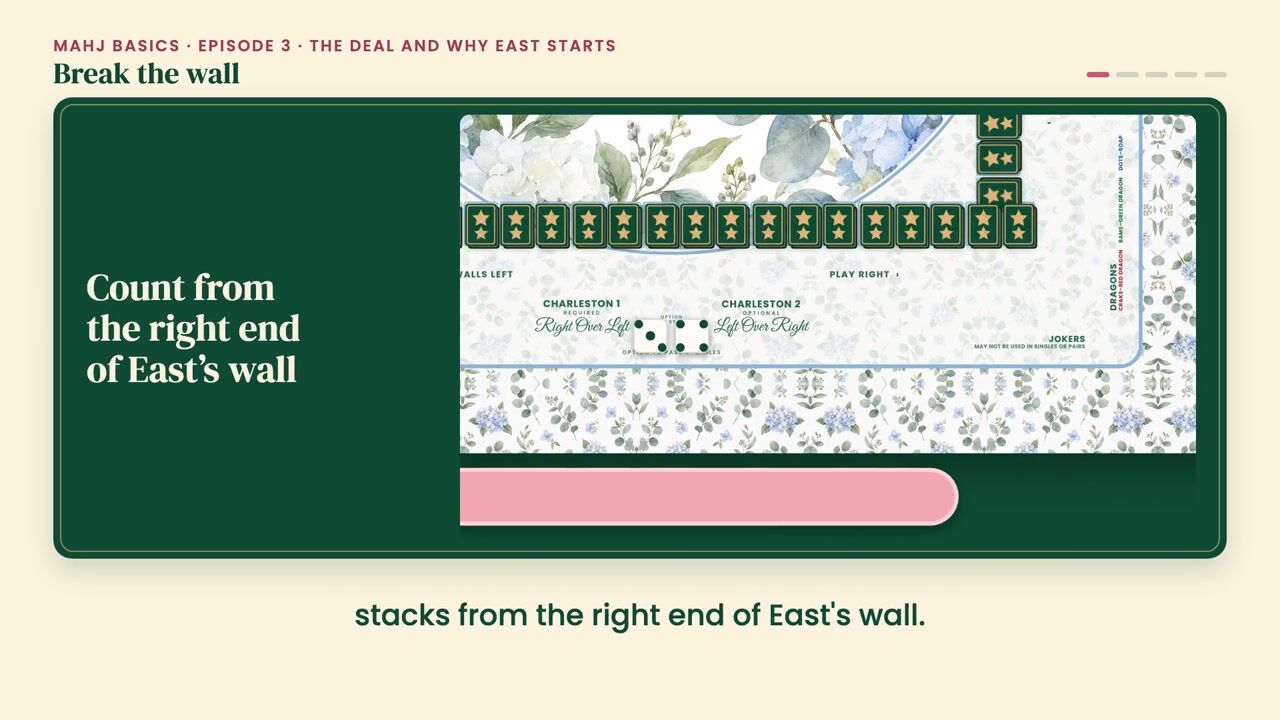
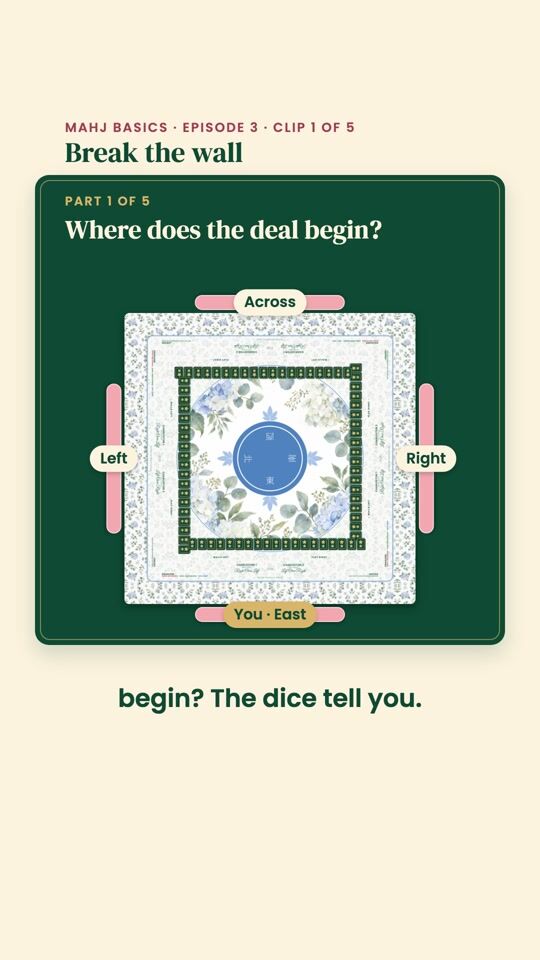
Where does the deal begin? The dice tell you. East rolls two dice, then counts that many stacks from the right end of East’s wall. Say East rolls a 7. One. Two. Three. Four. Five. Six. Seven. Open the wall after the last stack counted. The deal begins at that opening. Count stacks, not individual tiles. Remember: East rolls, counts from the right end, and opens the wall there.
Deal in fours
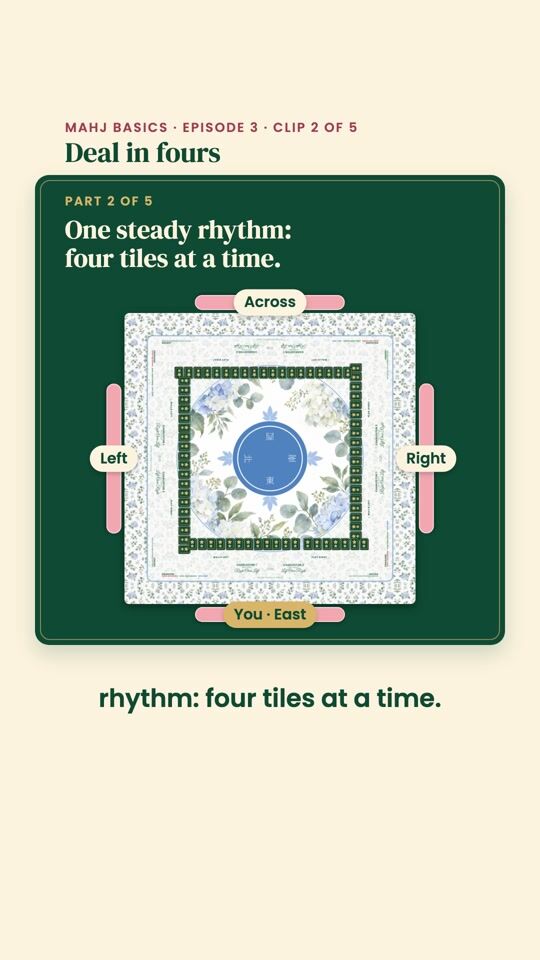
The deal has one steady rhythm: four tiles at a time. Starting at the wall break, East takes the first four tiles. Then each other player takes four in turn, moving to the right. Use the same rhythm for three rounds, until every rack has 12 tiles. Four. Eight. Twelve. Remember: groups of four, moving to the right, until everyone has 12.
The last tiles
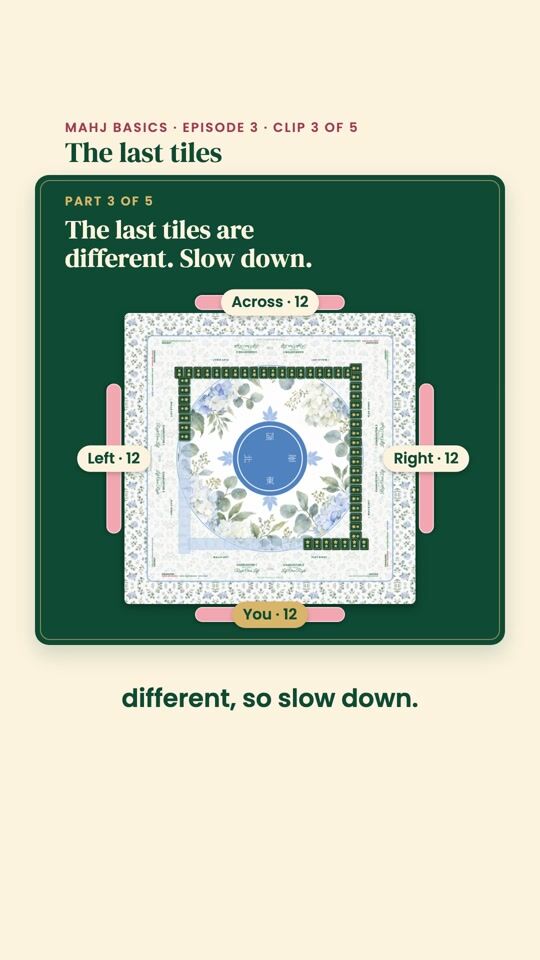
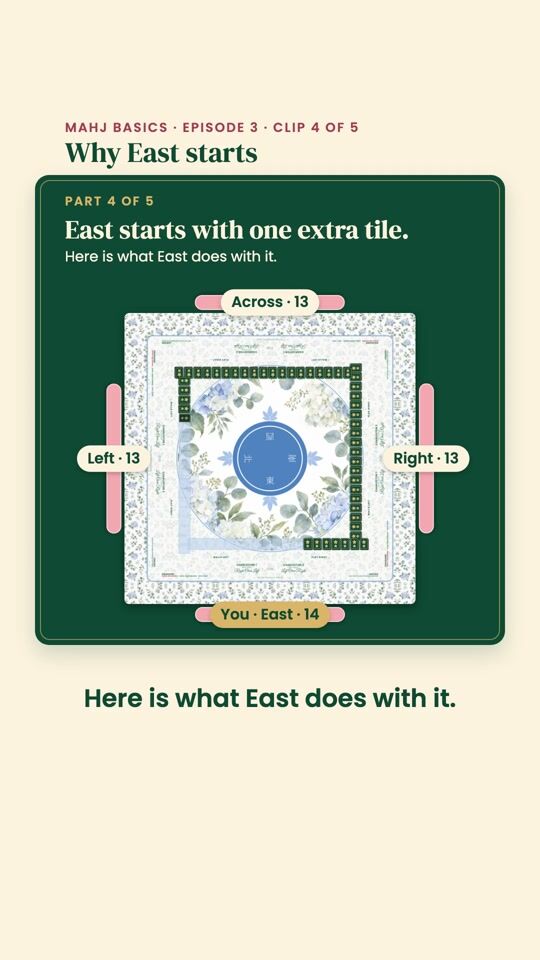
The last tiles of the deal are different, so slow down. East takes two more tiles. Each other player takes one more. Now count. East has 14 tiles, and every other player has 13. East is the only player who begins with an extra tile. Count before anyone rearranges a rack. If the totals are wrong, retrace the last four-tile round instead of guessing. Remember: 14 for East, 13 for everyone else.
Why East starts
East starts with one extra tile. Here is what East does with it. Before regular play, everyone exchanges tiles in the Charleston. That is its own lesson. Then East begins regular play by discarding one tile. From there, turns move counterclockwise, to the player on the right. On an ordinary turn, you pick one tile from the wall, place it on your rack, then discard one tile face up. Remember: East has 14 tiles and makes the first discard.
Walls one way, turns the other
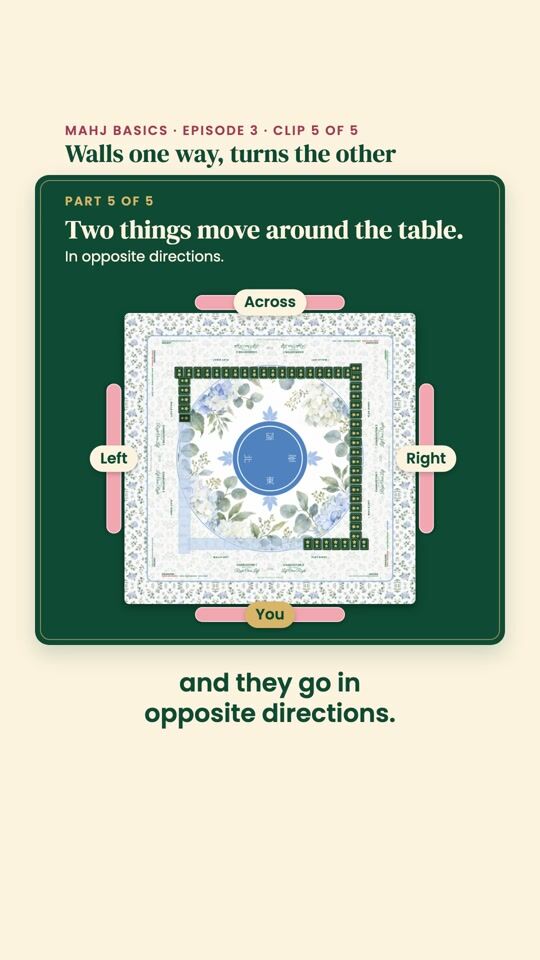
Two things move around the table, and they go in opposite directions. Tiles come off the walls clockwise. When the active wall is empty, continue with the wall on its left. Turns move the other way: counterclockwise, from each player to the player on the right. Keep wall movement and player movement as two separate ideas. This mat prints the reminder at every seat: walls left, play right. Remember: walls empty clockwise, turns pass to the right.